Welcome!
|
What an amazing world we live in...to watch an audio slideshow introducing my website, please click here.
|
|
|
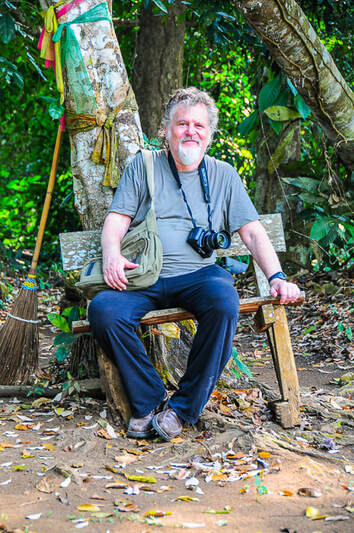 I’m sad to hear of the death of Keith Mundy, a long-time friend and colleague, from prostate cancer in Bangkok.
I first met Keith in around 1975 when we were both living in hippy ‘squats’ in Sydenham, London – vast Victorian mansions adapted to a lifestyle radically different from their original intention, with their servants’ quarters, tennis court in the garden and so on. We were never really close (Keith was always something of a loner) and we might never have met again if we had not shared the dream of teaching English abroad as a way to an exciting life, which we then both followed.
0 Comments
On the road from Mandalay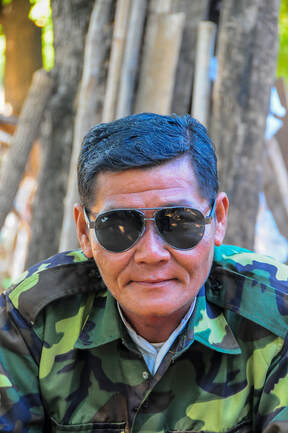 Win Win “It’s a win-win situation;” joked motorbike rider Win Win as we shook hands on our deal, “you take picture of beautiful Burma and I buy medicine to make my mother well”.
And that’s pretty much how it turned out, apart from losing Win Win at critical moments of the trip. He had a maddening habit of forgetting when he was supposed to pick me up, leaving me fuming at times when I thought he had abandoned me altogether. We were standing on the steps of the 79 Living Hotel in Mandalay, and after some friendly haggling, we agreed that I would give Win Win eighty US dollars and he would take me everywhere I wanted to go on his motorbike for the next three days. My hitlist included the ancient cities around Mandalay, the hill station of Pyin Oo Lwin to the east and the cave temples at Po Win Taung, way out west, and Win Win knew them all, so off we went.  A collection of short stories 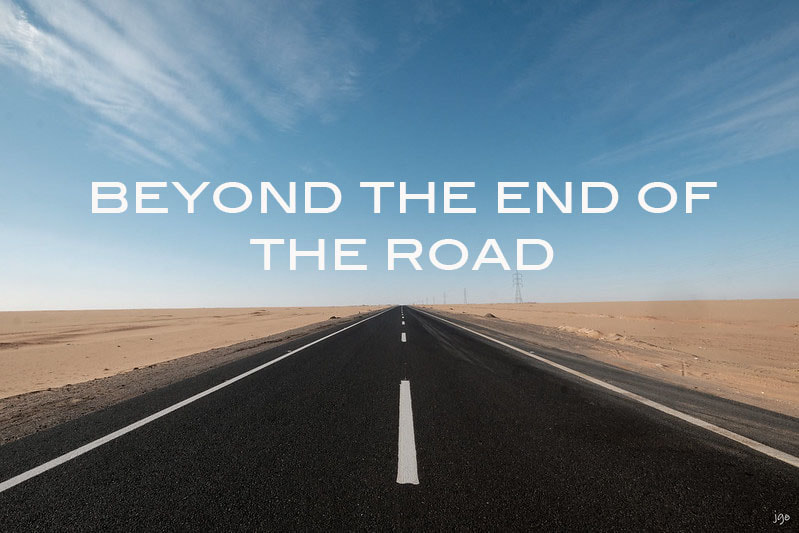 Image by Justin Otto, Flickr Image by Justin Otto, Flickr Back in the 1980s, I studied an M.A in English (Emphasis: Creative Writing) at San Francisco State University. As part of the requirement for the degree, I wrote a collection of short stories called In Transit. I recently pulled out a copy of this long-forgotten work, dusted off its yellowing pages, and have decided to share these stories on my website. They are mostly based on my own experiences and observations in Africa, South America and the USA, mixed with a heavy dose of imagination to be able to call it fiction. You’ll find these stories in a new section of my website called Short Stories, which I’ll be adding to as I dictate/transcribe the stories. I have begun with four stories, all set in Africa, and below is the first one--Beyond the End of the Road. I’ll be glad of any feedback that you would care to give. Happy reading! Lost and found in the Sahara I stood, literally, at the end of the road. The fresh tarmac ended in a neat ledge above the golden sand, and a clear blue sky pressed down on all horizons. From here, tyre tracks fanned out southwards into the vastness of the Sahara. It was only mid-morning, but already the sand burned my toes, which stuck out of my sandals. I pulled my pack under the sparse shade of a tree beside the last petrol station for 400 kilometres. All was silent, except for the rustle of leaves in a limp breeze. Every journey has its point of no return and this had to be mine. I had followed the thin vein of my dream, a red line on a Michelin map of Africa, to where the road ended and the dust began. Beyond lay mystery—the infinite spaces of the Central Sahara, the biggest sandpit in the world and ghost of lush forests in former ages. I had arrived the night before at In Salah just in time to see the bus pull out for Tamanrasset, the next stop on my route. The official told me the next bus was not for ten days. I wandered around the oasis. Mosquitoes droned above a stagnant pond surrounded by crumbling mudhuts and sagging palms. I walked out into the desert before lying down to sleep on my mat. In Salah—if God wills it. If God wills it, I will get a ride out of here tomorrow. If He wills not, then I will not either. Dancing in the desert 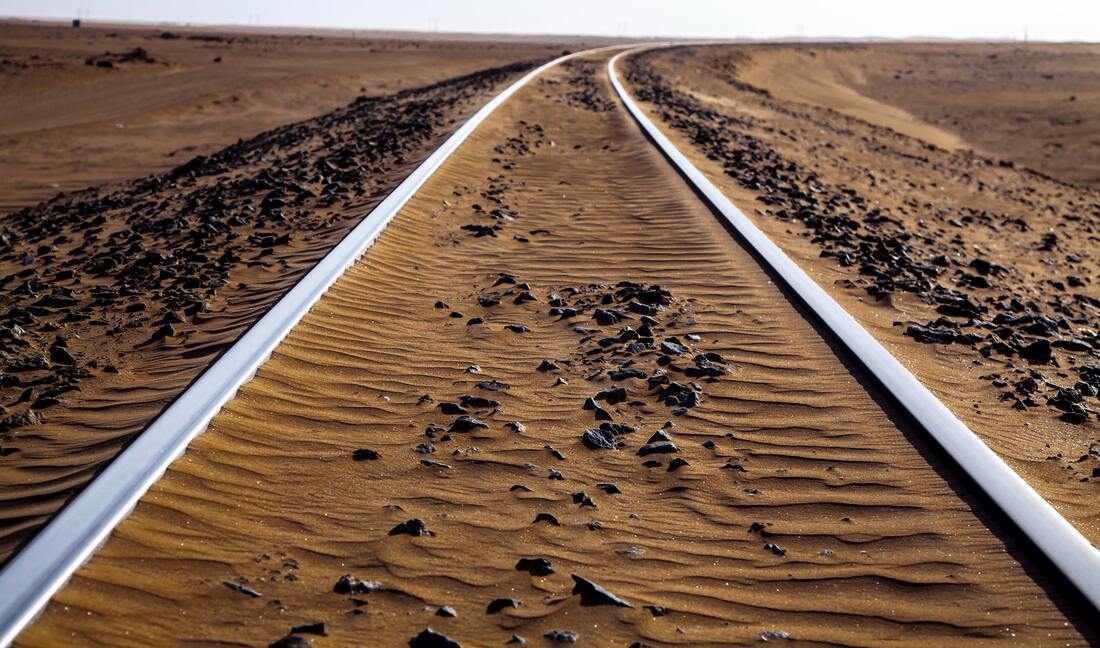 Image by Alan J. Hendry (Unsplash) Way back in 1975, I embarked on a life of adventure. My first move was to leave my native England and take a job as a volunteer teacher in Sudan. I was part of a group of 50 native English speakers who were hired by the Sudanese government to improve the level of English in high schools throughout the country. I was assigned to teach in Sennar, a town on the Blue Nile to the south of Khartoum.
I was supposed to spend a few days in Khartoum for orientation before taking a train to Sennar, but what with attempted coups and a heavy rain season, I had to spend a month in the capital before any trains started running. When I eventually got on the train and set out on my big adventure, I had plenty of time to write, so I got out my pen and began to scrawl the following words. The Sudanese Shuffle we were waiting for the train which was waiting for us until the train had waited for us and perhaps we had been waiting for the train for some days now when we started. we were starting in the train when we stopped and waited and went again and when we went we hardly went at all while the wheels rolled around at the onset. after the onset we set out to the desert and all its dreams, while the wheels would roll round and then stop, and then sound like they’d never be starting again. just as slow now as slowness can get and we still haven’t quite got there yet. A review of the novel Bangkok Wakes to Rain 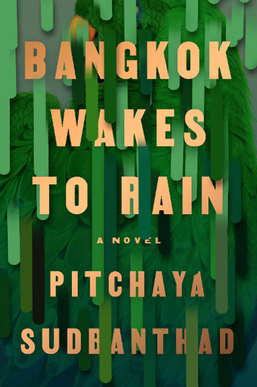 Everybody knows that Bangkok will drown one day. It sits a precarious 1.5 metres above sea level, which continues to rise steadily due to climate change, while the city is sinking under the weight of its concrete jungle by a few centimetres each year. Some give it ten years, others fifteen. For the city’s 10 million or so inhabitants, this is a cause for concern, and the government’s efforts to stave off the inevitable with multi-million dollar flood barriers have all the pathos of a madman trying to hold back the tide.
The scenario is ripe for a dystopian novel, which Pitchaya Sudbanthad has provided in the form of Bangkok Wakes to Rain. This wildly ambitious debut novel jumps back and forth through the city’s history from the mid-19th to the mid-21st century, and by the end all that remains of the former capital are the tops of the tallest skyscrapers, with floodwaters splashing at their windows. 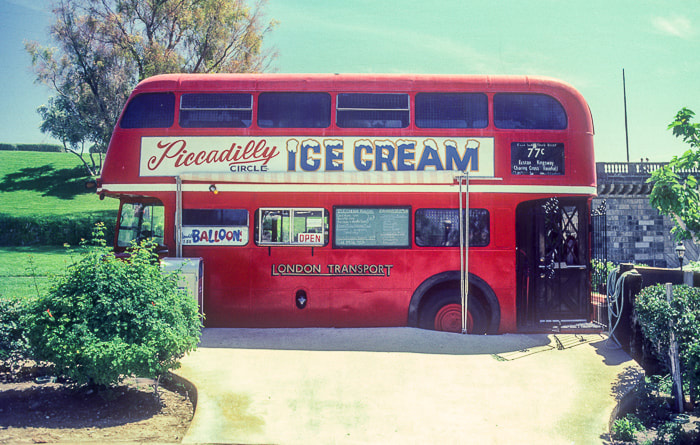 A London bus in Arizona Back when I was a bus driver for London Transport, I used to drive the number 47 between Catford and Shoreditch, crossing over the River Thames at London Bridge. Crossing the bridge several times each day, I developed a fondness for this huge span of granite that connected the different worlds of south and north London. However, as I passed back and forth, the bridge was being taken apart to be sold to a rich American, so the story went.
Many years later, when I was touring around the USA, I passed a turn-off signposted to the bridge, and my curiosity drew me to look at its new location in deepest Arizona. I found the bridge was the focal point of a tourist village at the entrance to Lake Haversu City, a far cry from the grimy streets of London. Still later, when I penned several travelogues recounting my quirky travel adventures, I reflected on my different experiences of the bridge on either side of the Atlantic Ocean. London Bridge Revisited is one of the stories in the collection called Searching for Shangri-La, which is available as an ebook or paperback on Amazon. I have also posted the story on this site, and if you’re curious to know what it’s like to drive a bus in London or visit a tourist village in Arizona, click here to read or listen to the ten-minute tale. 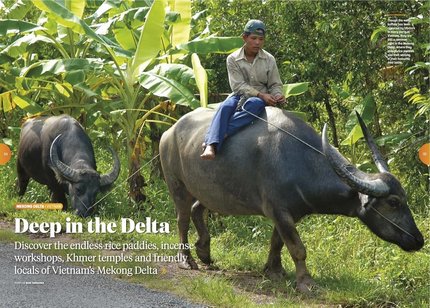 A photo essay on the Mekong Delta in Vietnam Time to freshen up the website for the new year, so I’ve made a few additions and changes. Firstly, I’ve added a few scans of stories that appeared in printed magazines (an increasingly rare form of media!) during 2016. These are:
- Deep in the Delta, a photo essay on the Mekong Delta for Jetstar Asia magazine. --Strange Town, a focus on Antananarivo, capital of Madagascar, for the South China Morning Post. --Blissful Bloom, a story about the sacred lotus for Morning Calm (Korean Air inflight). I’ve also changed the sample story from my collection ‘Searching for Shangri La’. ‘Sweeping Meditation’ is a chronicle of my changing attitudes to the fascinating activity of sweeping leaves. There’s also an audio version of the story, so rest your eyes for ten minutes and listen to the tale unfold. 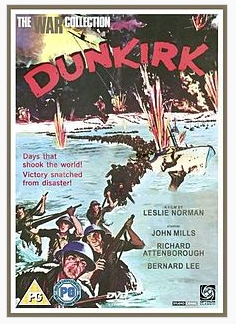 When I was about seven years old, my Dad took me to the cinema to see a film called ‘Dunkirk’ starring John Mills and Richard Attenborough, about the evacuation of hundreds of thousands of British soldiers from the beach at Dunkirk as the Germans overran France in the Second World War. It was one of the first times I had been to the cinema, and the film made a strong impression on me, particularly the scenes of helpless, terrified soldiers trying to take cover in the sand dunes as German planes dropped bombs on them and strafed them with machine-gun fire.
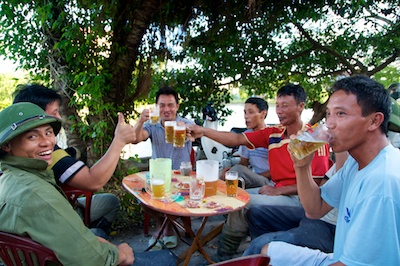
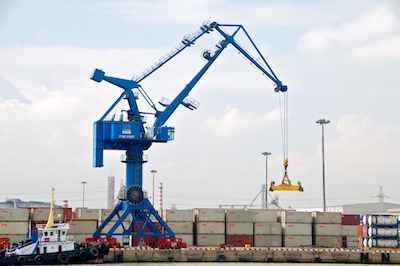
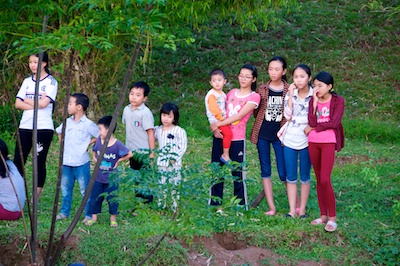
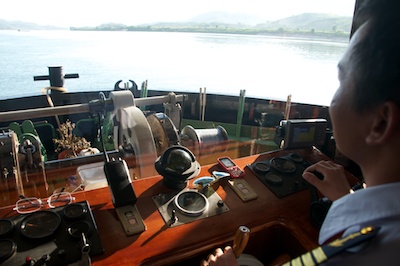
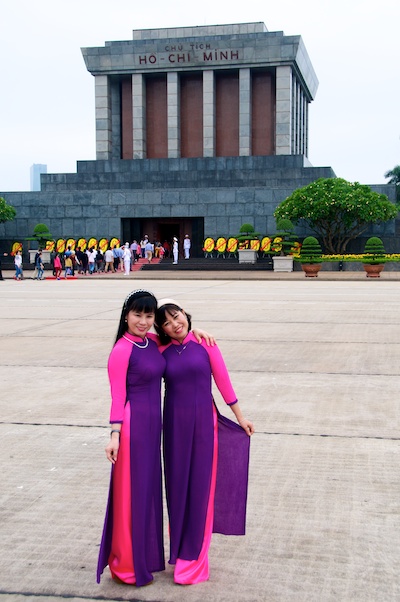
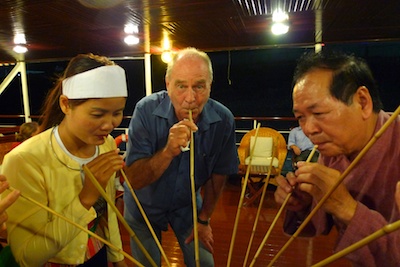
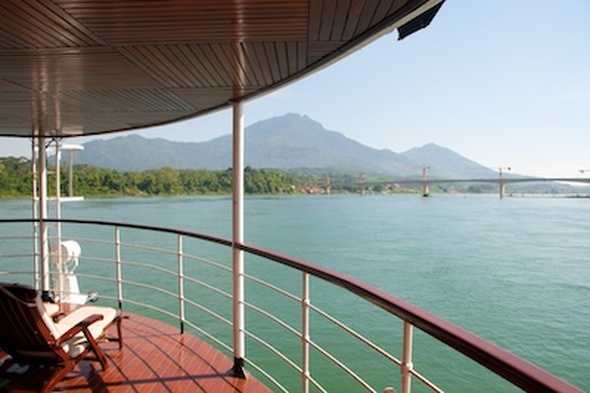 Watching the view unfold from a sun lounger Usually when I travel, I’m updating a guidebook, so I’m rushing around from dawn to late, checking hotels and restaurants for inclusion in the next edition of the guide. But a few weeks ago I lucked out, spending ten days on a Pandaw cruise around Ha Long Bay and the Red River Delta in Vietnam in order to write and photograph a story about it for the company’s magazine, as it was a new route that they wanted to publicise. Loved it! Sprawled on a sun lounger, taking in the endless change of view, from towering karst outcrops to container cranes, brick kilns, fields of rice and passion fruit, locals waving from the riverbank. Wandering around small villages, watching water puppet shows, seeing conical hats made, listening to traditional songs sung by teenagers. Writing a few notes about the experience and getting to know my fellow passengers, gorging on gourmet food three times a day. Following are a few images from the trip. If you want to read the full story, take a Pandaw cruise and read it in the Pandaw Magazine while aboard, or sign up as a subscriber on their website—www.pandaw.com.
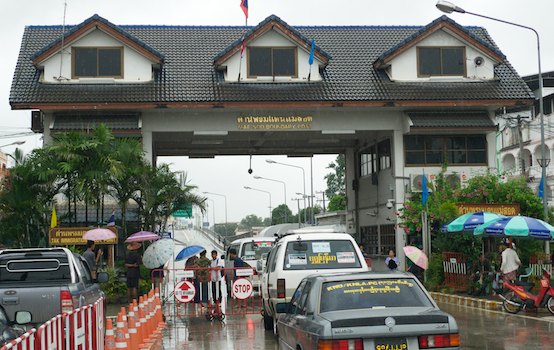 The Thai border post at Mae Sot on a rainy day To be a successful guidebook writer, you need not only good research and writing skills, but also a good sense of direction. This is one area of the job in which I normally feel quite confident, as I spent a few years driving minicabs in London as well as driving buses for London Transport, and I reckon if you can find your way around London, you can find your way anywhere.
When I’m on the road researching a guidebook update, I often have a list of 30 or more hotels, restaurants, bars, spas, pharmacies and so on that I need to locate each day in order to decide if they are worth recommending for the new edition of the guide. With the help of maps in the guidebook and online, I usually manage OK, but sometimes things go wildly wrong, and I always get messed up in Mae Sot. |
Ron's BlogCategories
All
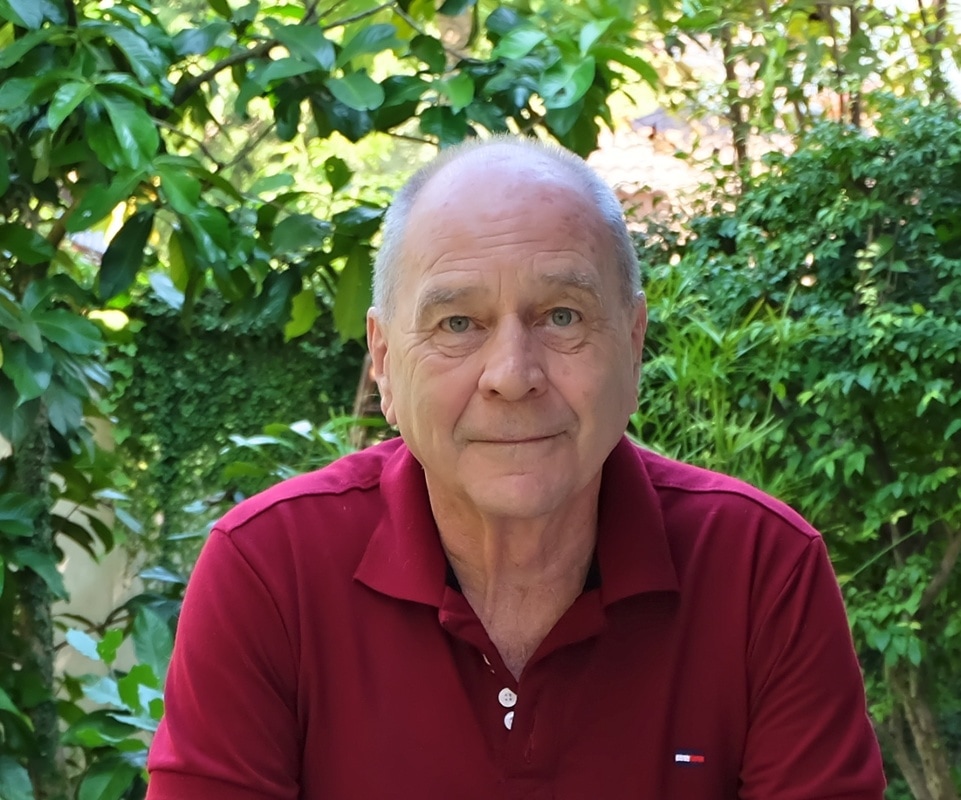
Ron Emmonsis a British writer and photographer based in Chiang Mai, Thailand. Categories
All
Archives
April 2024
|


 RSS Feed